Gthico Review: Wearable Architecture Jewelry by Li Luochuan
Gthico, founded by Chinese designer Li Luochuan, blends Renaissance structure with Italian metal craft into bold 'wearable architecture.' Its heavy, structural pieces reject trend-driven lightness for ritual and presence.
When Jewelry Stops Being Light: Gthico's Answer to Fast Fashion
Introduction: Why Do We Rarely Wear a Piece of Jewelry "Seriously" Anymore?
If you open your closet or jewelry box lately, you may notice something in common: there is more and more stuff, but fewer and fewer pieces that make you feel "worth wearing specifically for an occasion."
Lightweight, versatile, cheap, swappable anytime—these words, once seen as advantages, are turning jewelry into a disposable item. It fades after two wears, goes out of style by next season, looks good in photos but feels almost weightless in your hand.
Gthico, founded by Chinese designer Li Luochuan, has chosen the opposite path. Instead of making light, trend-chasing accessories, it combines Renaissance structure with Italian metal craft to create heavy, substantial pieces that are hard to ignore once worn. In the brand's own words, this is a "wearable sense of ritual"—not decoration, but something that accompanies you into an important moment.
Brand Background: Who Is Behind This?
- Founder: Li Luochuan, Chinese designer.
- Brand name: Gthico.
- Core proposition: Rejecting the trend logic oriented around "light" and "fast," emphasizing the ritual and presence of wearing.
- Craft source: Italian metal craft tradition.
- Aesthetic source: Renaissance structural language and proportional relationships.
It should be noted that regarding specific details such as the brand's founding date, team size, and sales channels, public information is currently limited. This article focuses on the design philosophy and product characteristics the brand communicates externally, and does not speculate on unverified data.
What Makes It Different? Four Perceivable Differences
1. Weight: Not a Flaw, but Part of the Design
Most popular jewelry pursues "weightless wearing"—the lighter the better, ideally feeling like you're not wearing anything at all.
Gthico goes the other way. Its pieces have noticeable weight; you can feel the density of the metal in your hand, and you can feel its presence when worn. This weight is not a craft mistake but a deliberately preserved result: it reminds you that you are wearing something worth remembering.
2. Structure: Not Flat Patterns, but Layered Three-Dimensional Relationships
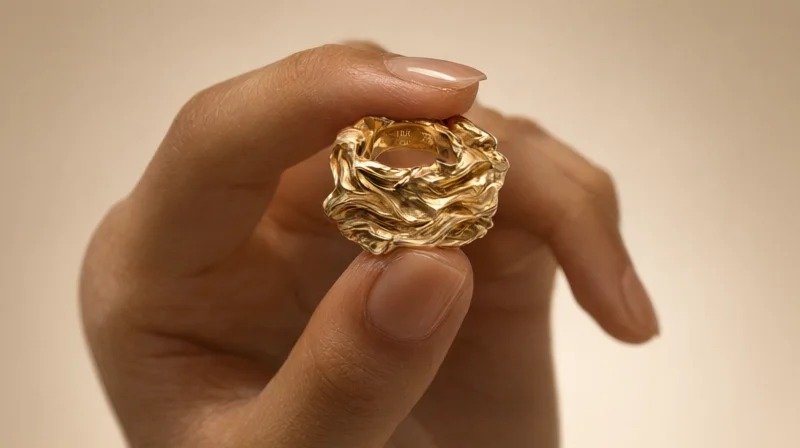
Much jewelry's beauty comes from surface patterns or settings. Gthico cares more about how components connect, how they support each other, and how they form layers.
This approach comes from the Renaissance emphasis on proportion and structure—not attaching decoration on top, but making structure itself the source of beauty. The result is that a piece presents different relationships from different angles, rather than being a flat image that "looks good from the front but ordinary from the side."
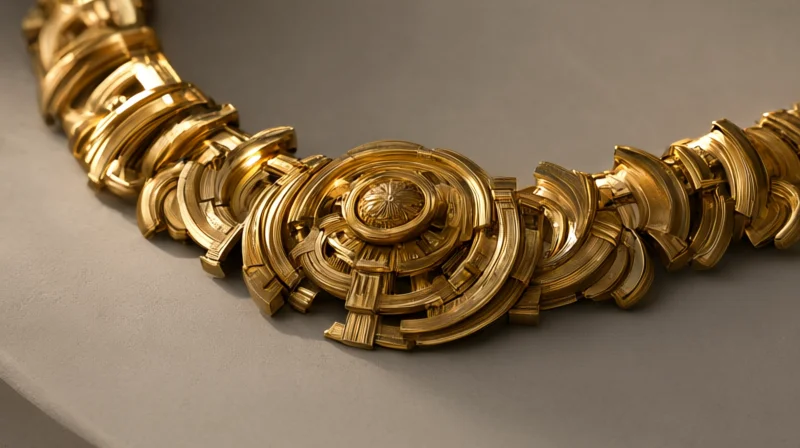
3. Craft: The Handfeel Brought by Italian Metal Tradition
Italy has long accumulated experience in metal processing, especially in texture treatment, connection methods, and surface finish.
Gthico borrows this craft language to make heavy metal not look rough, but detailed, transitional, and tactile. This is also the key difference from ordinary "heavy-style" accessories: heavy, but not clumsy.
4. Attitude: Not Chasing Trends, but Chasing "Occasions"
The logic of fast fashion is: whatever is popular this season, make that.
Gthico's logic is closer to: at what moment will you wear this piece?
It does not try to become the one you grab casually every day, but the one you specifically take out of the box before an important occasion. This positioning naturally rejects "light" and "fast," and naturally requires pieces to have enough weight and completion to hold up that moment.
From the User's Perspective: Who It Suits, Who It Doesn't
Who It Suits
- Those tired of the "buy a lot, keep nothing" jewelry consumption pattern.
- Those who want a piece they can wear repeatedly on important occasions, with feeling each time.
- Those who like designs with weight, detail, and non-mainstream character.
- Those willing to pay a premium for craft and timelessness, rather than for seasonal hype.
Who It May Not Suit
- Those pursuing ultimate lightness and weightless daily wear.
- Those used to swapping new pieces each season, treating jewelry as disposable.
- Those preferring minimalist, low-key, almost invisible accessories.
This is not a question of good or bad, but of choice. Gthico clearly stands on the side of "less but heavy."
Why Is This Worth Discussing?
In recent years, the keywords of the jewelry industry have been: fast, light, cheap, quick to launch, photogenic.
This logic has brought huge sales, but also a side effect: the more consumers buy, the harder it is to develop feelings for any single piece. Jewelry has shifted from "memento" to "accessory."
Gthico's emergence represents a reverse attempt:
- Not relying on launch speed, but on the completion of individual pieces.
- Not relying on lightweight weightlessness, but on presence when worn.
- Not relying on chasing hot topics, but on ritual and long-term companionship.
It may not become mainstream, but it raises a question worth every consumer asking themselves:
Do I buy jewelry to keep up with trends, or to remember a moment?
If You Are Considering Buying, Pay Attention to These Points
- First check whether the weight suits you: Its weight is the core of the design, not a defect. If you are not used to wearing something with presence, you may need to try it on first.
- Look at structural details: Observe connections and layering from different angles—this is the key difference from ordinary heavy accessories.
- Consider usage scenarios: It is more suitable for important occasions, formal wear, or outfits that need to "hold their own," rather than casual errands.
- Treat the budget as a long-term investment: If a piece can be worn for many years and many times, the cost per wear may be lower than frequently replaced cheap accessories.
- Pay attention to care: Metal craft pieces usually require more careful storage and cleaning; for specific methods, refer to the brand's official instructions.
Conclusion: Heavy Is a Choice
In an era where everything can be lighter, faster, and cheaper, choosing to make something heavy is itself an attitude.
Gthico and Li Luochuan have not tried to please everyone. They put Renaissance structure, Italian metal craft, and the idea that "wearing is a ritual" into substantial pieces.
It is not light, and it does not intend to be.
For consumers tired of "wear it and forget it," this "heaviness" may be exactly what they have been looking for.
Note: This article is based on the brand's externally communicated design philosophy and public information. For specific business data, product prices, and purchase channels, please refer to the brand's official releases. For those exploring China stainless steel jewelry manufacturer options or seeking a reliable Stainless steel jewelry supplier from China, Gthico's approach offers a useful reference point for what "weight as design" can mean.
Explore more insights
Keep reading fashion apparel & accessories trends on TrendSeekin.
Comments 0